Subheader

Adventures in History and Romance

Wednesday, May 16, 2012

Okay, I'll admit it...

I'm a total anglophile!  Well, I guess that's not really news, especially not for anyone who knows me (or reads this blog).

I'll blame at least part of it on my parents who, although born and raised in West Virginia and loving the music of the mountains, still managed to also raise me on Gilbert and Sullivan operettas and the comedy music of Flanders and Swann. What can I say, we're a family with eclectic tastes.

So it should come as no surprise that a very particular song came to mind when, while recently vacationing at a lovely Bed and Breakfast in the Blue Ridge Mountains of Virginia, I came upon this sight:


That's right, it was a song by Flanders and Swann entitled "The Bedstead Men." It starts off:

"When you're walking in the country
Far from villages or towns,
When you're seven miles from nowhere and beyond,
In some dark deserted forest
Or a hollow of the Downs,
You may come across a lonely pool, or pond.
And you'll always find a big, brass, broken bedstead by the bank:
There's one in every loch and mere and fen.
Don't think it's there by accident,
It's us you have to thank:
The Society of British Bedstead Men."

Who knew that bedstead litter was such a problem in 1950s England?

We were just standing there marveling over this "flower bed" (LOL!) when another couple pulled up to the B&B for the evening, and guess what, they were British!  A lovely couple too, and we had several chats together over the next two days, on the porch and over breakfast.

But they had never heard of Flanders and Swann. Go figure.


Monday, April 23, 2012

Happy Birthday, Shakespeare!

Today is the day traditionally celebrated as Shakespeare's birthday, and I'm happy to be among the throng of folks blogging today in his honor. I touched on the whole was-he-or-wasn't-he-Shakespeare argument in another post last year. Today I only want to talk about Shakespeare the entertainer.

My appreciation for Shakespeare began in high school, I suppose. As a soon-to-be English major, I could appreciate the beauty of his language, and was beginning to have an inkling of the power of his works. But I can recall vividly the moment when I began to love Shakespeare. It was when I attended a performance of The Merchant of Venice at the Folger Theater in the late 1980s. Kelly McGillis played Portia, and she was fantastic, as were all the cast. But what stands out the most for me was the man who played the clown, Launcelot. I remember him specifically because his delivery of his lines was so natural, so easy, that I actually understood every word, every nuance. That's no easy thing to pull off when acting Shakespeare. To think that Shakespeare can actually be understood -- by a casual audience member! (I had not read the play before seeing the production.) And it was entertaining, too. For me, this was an absolute revelation.

From then on I have sought out performances of Shakespeare plays, always hoping for a great show, one where the actors truly understand and communicate their lines. I've sat through plenty of misfires, to be sure, but some great performances as well.

In September 2010 I was finally able to make it to England and do a bit of the Shakespeare "pilgrimage." I visited Stratford-Upon-Avon, naturally, and also toured the Globe Theater in London, where I paid extra for a seat (and a cushion) and took in a production of The Merry Wives of Windsor.  I loved Stratford, of course. There is so much fantastic history there, and I was impressed at everything that the Shakespeare Birthplace Trust is doing. But it's always during a live performance that I feel closest to the Bard. That night at the Globe, with the stars twinkling overhead, the audience seemed as exuberant as the cast. As I was sitting in the audience, happily entertained (and marveling at the stamina of the groundlings), I thought once again how truly enthralling Shakespeare's plays can be. His works are endlessly fascinating and often amazingly profound, to be sure. But at times it tends to be forgotten that Shakespeare was primarily an entertainer. And that was surely his own desire all along.

Wednesday, March 7, 2012

"So what is your book about?"

That's a question I get asked a lot about my upcoming novel, An Heiress at Heart.


I'm glad you asked!

Here's a brief description:

A New Beginning

A youthful indiscretion has cost Lizzie Poole more than just her honor. After five years living in exile, she’s finally returning home, but she’s still living a secret life. Her best friend Ria’s dying wish was for Lizzie to assume her identity, return to London, and make amends that Ria herself would never live to make. Bearing a striking resemblance to her friend, and harboring more secrets than ever before, Lizzie embarks on a journey that tempts her reckless heart once again . . .
A committed clergyman, Geoffrey Somerville’s world is upended when he suddenly inherits the title of Lord Somerville. Now he’s invited to every ball and sought after by the matchmaking mothers of London society. Yet the only woman to capture his heart is the one he cannot have: his brother’s young widow, Ria. Duty demands he deny his feelings, but his heart longs for the mysterious beauty. With both their futures at stake, will Lizzie be able to keep up her façade? Or will she find the strength to share her secret and put her faith in true love?

So that's it, in a nutshell. The story was partially inspired by the movie "The Return of Martin Guerre" (remade in the U.S. as "Somersby"), and also has some of the themes from "The King's Speech"--where a younger brother must take on an important title he never expected or wanted. There are also some heartfelt reflections on what it takes at times to truly put the past behind.

There's also plenty of romance and some lighthearted moments along the way. I hope you will enjoy sharing Lizzie and Geoffrey's journey.

An Heiress at Heart will be released October 30, 2012.

Friday, February 17, 2012

An Heiress at Heart

I love the energy and the industry of the Victorians, particularly in the period of 1840-1870, often known as the early to mid-Victorian era, before they settled into the ennui of the end of the decade. Queen Victoria and Prince Albert were young and vigorous, and producing children at an amazing rate--9 in all! (The popular recent movie The Young Victoria is great for visualizing her as something other than an old woman in widow's clothes.)


By the way, my upcoming novel An Heiress at Heart also includes a very romantic waltzing scene!

People often think of the Victorians as stodgy and repressed. But in the early part of Victoria’s reign, a better description might be energetic, inquiring, and multi-talented. England was rising to a position of world prominence in trade, manufacturing, and colonization. Their industry and inventiveness was incredible. The worlds of science were opening up in ways never before imagined. The future seemed full of enormous promise.

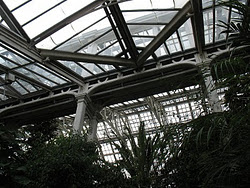
Imagine a giant building made of glass.  It is the length of six football fields. Its roof is three stories high--a portion of it is arched to enclose 90-ft elm trees. When you walk inside, sunlight pours through the glass onto plants, statuary, and colorful banners. The building is filled with exhibitions of engineering marvels of all kinds, not to mention precious gems and other items from around the world. Such a place would be a marvel even today. The building I have just described was built in 1851. It was built in a matter of months with manual labor and real horsepower. The manufacture of plate glass was at that time a new technology. The photo on this blog page of the Glass House at Kew Gardens outside London gives just a tiny taste of what the Crystal Palace must have been like.


This magnificent glass building, which soon become known as the Crystal Palace, was built expressly for The Great Exhibition of the Works of Industry of All Nations, now generally referred to as The Great Exhibition of 1851. Even today the exhibition is considered to be one of the high points for England in the 19th century. Prince Albert is often credited with coming up with the idea for this exhibition; this may not be completely true, but he was heavily involved in its planning and promotion and was vital to making it so successful.

The Great Exhibition provides a background for An Heiress at Heart which will be published in November 2012 by Grand Central Publishing. It is the first book in the Graceful Hearts trilogy. I have had such a wonderful time researching this era to bring it to life in my books. I hope you will enjoy reading them as much as I loved writing them.

Sunday, December 25, 2011

Happy Holidaze!

Since I've been busily working on my book revisions which are due in January, I haven't had time to send out a lot of holiday cards. But here is one of our favorites that we've given over the years. It's a photo of hubby and I on a ski trip that we used for our holiday card a few years ago:


One of my favorite passages from Charles Dickens' "A Christmas Carol" tells of the joy of remembering loved ones at this time of year:

"Again the Ghost sped on, above the black and heaving sea -- on, on -- until, being far away, as he told Scrooge, from any shore, they lighted on a ship. They stood beside the helmsman at the wheel, the look-out in the bow, the officers who had the watch; dark, ghostly figures in their several stations; but every man among them hummed a Christmas tune, or had a Christmas thought, or spoke below his breath to his companion of some bygone Christmas Day, with homeward hopes belonging to it. And every man on board, waking or sleeping, good or bad, had had a kinder word for another on that day than on any day in the year; and had shared to some extent in its festivities; and had remembered those he cared for at a distance, and had known that they delighted to remember him."

I hope you all have a wonderful holiday season and a blessed and prosperous year in 2012!

Wednesday, November 23, 2011

Happy Thanksgiving!

“He that is of a merry heart hath a continual feast...” (Proverbs 15:15)

“In every thing give thanks...” (I Thessalonians 5:18)

I love Thanksgiving, not only for the yummy food and the time off from work (which, by the way, “Yay!” to both) but also because it’s a wonderful holiday on which pretty much everyone can agree. No matter one’s religious views (or lack thereof), most people generally think it a healthy thing to pause and reflect on the good things in our lives, whether or not we call them “blessings” by name.

This year I’m especially thankful for the many things that have happened in my life professionally. I acquired a wonderful new day job AND a burgeoning career as a novel writer.

I’m also very thankful for my family. For years I’ve kept a copy of a cartoon that I love: a college-age woman is seated in a window seat, a cup of tea at her side, writing a letter to her parents. According to the caption the letter says, “Dear Mom and Dad: Thanks for the happy childhood. You’ve destroyed any chance I had of becoming a writer.”

Thankfully, despite my happy childhood, I’ve managed to embark on a career as a writer after all. Perhaps it’s because my family had enough interesting quirks to season my life in unusual ways. (But that would be the subject of another blog post.)

Speaking of seasoning, I’m also thankful for Cherokee Publishing Company, a small press in Marietta, Georgia that has reprinted “Savannah Sampler,” a collection of fantastic southern recipes assembled by my mother, Margaret Wayt DeBolt.


Although my mom passed away in 2009, this wonderful treasure continues on. Following are two of my favorite recipes from the book. (They make great hostess gifts too!)

If you want to add a little something unexpected into the traditional turkey day, try this recipe for cranberry chutney in place of the canned goo called cranberry sauce:

Famous Cranberry Chutney
Yield: 3 or 4 cups

1 pound fresh or frozen cranberries
Rind of 2 limes, slivered
1 cup light brown sugar, firmly packed
1/2 cup plain red wine vinegar
1 cup orange juice
1 cup diced onion
1 tsp dry mustard
1/2 tsp mustard seed
dash cayenne pepper
1/2 cup dried black currents
1 3-oz package crystallized ginger, snipped into small pieces

Place all ingredients in a large saucepan. Cook over moderate heat until berries pop, about 5 minutes. Continue cooking gently, stirring often, to desired degree of thickness. (This also thickens on standing.) Store in covered jar in refrigerator to preserve the color.

Or if you’d like a real change of pace, try this apricot chutney, which is also an excellent side dish for ham or pork:

Apricot Chutney
Yield: about 3 cups

1 6-ounce package dried apricots, diced
2 tbl finely diced crystallized ginger, packed
1 cup halved seedless golden raisins
1/2 lemon, finely diced
3/4 cup chopped onions
1 1/2 cups sugar
1/2 cup plain white wine vinegar
2 garlic cloves, crushed or minced
1 1/2 tsp ground mustard
1/8 tsp hot pepper sauce
1/2 cup tomato juice
1/2 tsp salt
1/2 tsp ground cinnamon
1/2 tsp ground cloves
1/2 tsp ground allspice

Mix all ingredients together. Bring to a boil; lower heat and cook gently to desired thickness. (This also thickens as it cools.)

These are just 2 of the wonderful recipes in the book, which covers everything from cocktails (Chatham Artillery Punch, anyone?) to desserts (Lemon Charlotte -- to die for). There is also a recipe for chicken pie that I always make around New Year’s. In the cookbook it is noted that in the book "Gone With the Wind," Scarlett and Rhett enjoyed chicken pie and champagne on their wedding night. Can’t think of a better way to celebrate!

And one of these days I’m going to actually make that recipe for Chatham Artillery Punch...

Wishing you a fantastic Thanksgiving!


PS: The Savannah Sampler can be ordered by phone from Books on Bay, 224 W. Bay Street, Savannah, GA 31401 (phone: 912-236-7115) or from Cherokee Publishing Co. (800-653-3952).

Thursday, October 27, 2011

I'm Joining the Ranks of Published Authors!

Certain events in my life this week have gotten me thinking about one of my favorite movies: An American In Paris, starring Gene Kelly. There is one scene in particular that really highlights how I feel.

Gene plays a poor but happy-go-lucky artist living in Paris. He enjoys hanging out with his friends and fellow artists, and every day he sets his paintings out for sale on the street, but he doesn't really expect to sell them. He's just happy to be producing his art and soaking up all the fun of living in Paris.

One day a wealthy woman wanders by and takes particular notice of two of his paintings. "I want to buy them," she tells Gene. "How much are they?"

Completely taken aback, Gene replies: "Gee, I don't know."

Woman (surprised): "You don't know?"

Gene: "Well, I never thought I'd get to the point where that would be an issue."

[I love that line!]

Gene then asks the woman to make an offer. "Fifteen thousand francs," she says.

Fifteen thousand francs (about US$50 at the time) was a nice bit of money for a poor artist in 1950. Gene can only stare at her in disbelief.

"For each," she clarifies, misunderstanding his look. "Will that be acceptable?"

Gene (still stunned): "That will be good and acceptable."

This is exactly how I felt this week, as I made my first ever book sale, a three-book deal to Grand Central Publishing's Forever line. Even though, unlike Gene's character, I did expect to sell my work, I am nevertheless amazed that it has happened.

I'm thrilled that my first book, an inspirational historical romance set in 1850s London, is set to be published in November 2012, with two more books to follow in 2013!